What are oil slicks?
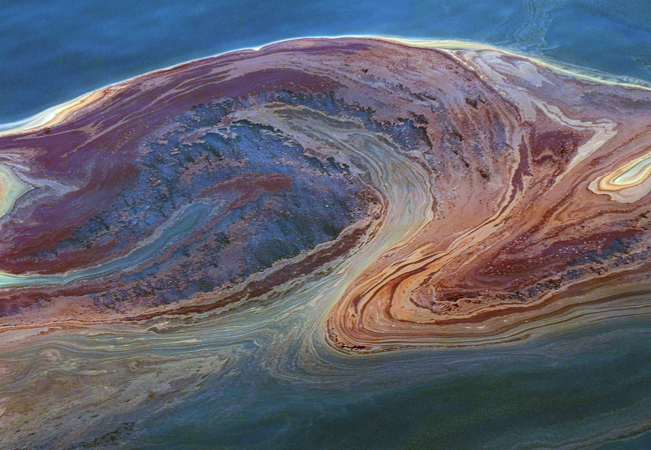
Oil slicks float on oceans and seas, covering them in a thick film of crude or refined petroleum oil. When freight ships carrying tens of thousands of tons of fuel crash, malfunction, or encounter harsh weather, they spill enormous amounts of oil into the water. Since oil and water don’t mix, the oil spreads out into a layer that hovers, as one mass, on top of the ocean.
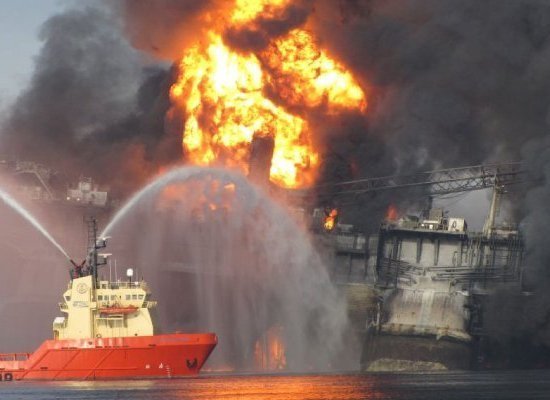
Thousands of oil slicks result from massive oil spills every year. Oil slicks are difficult to control or contain and even more challenging to clean up. Once formed, an oil slick becomes an unpredictable phenomenon. It might end up spreading, migrating, thinning or thickening, moving towards land or further out to sea. An international community of activists, organizers, and technical developers has formed to identify, manage, and eliminate the devastating oil slicks.
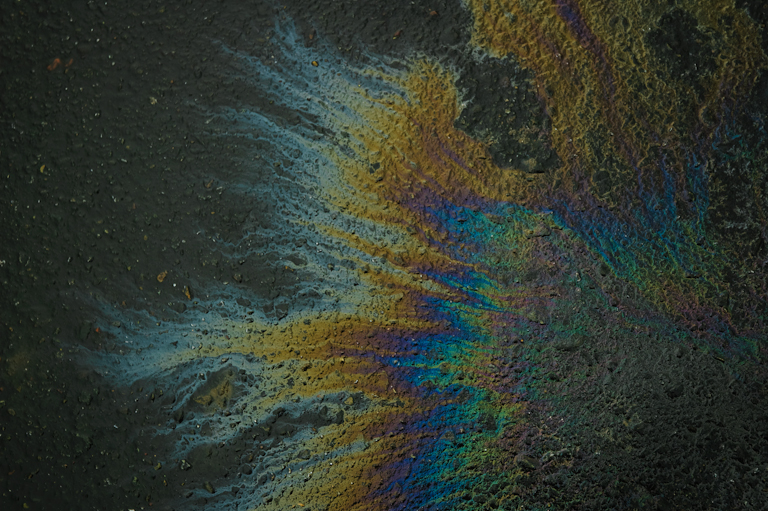
The fate of an oil slick is determined by many factors, including local and regional weather, ocean currents, tides when near a land mass, the relationship between air and water temperature, the chemical composition of the crude or refined oil, wind direction, and the presence of icebergs. Humans must intervene with tracking devices, booms, absorbent materials, and chemical treatments.
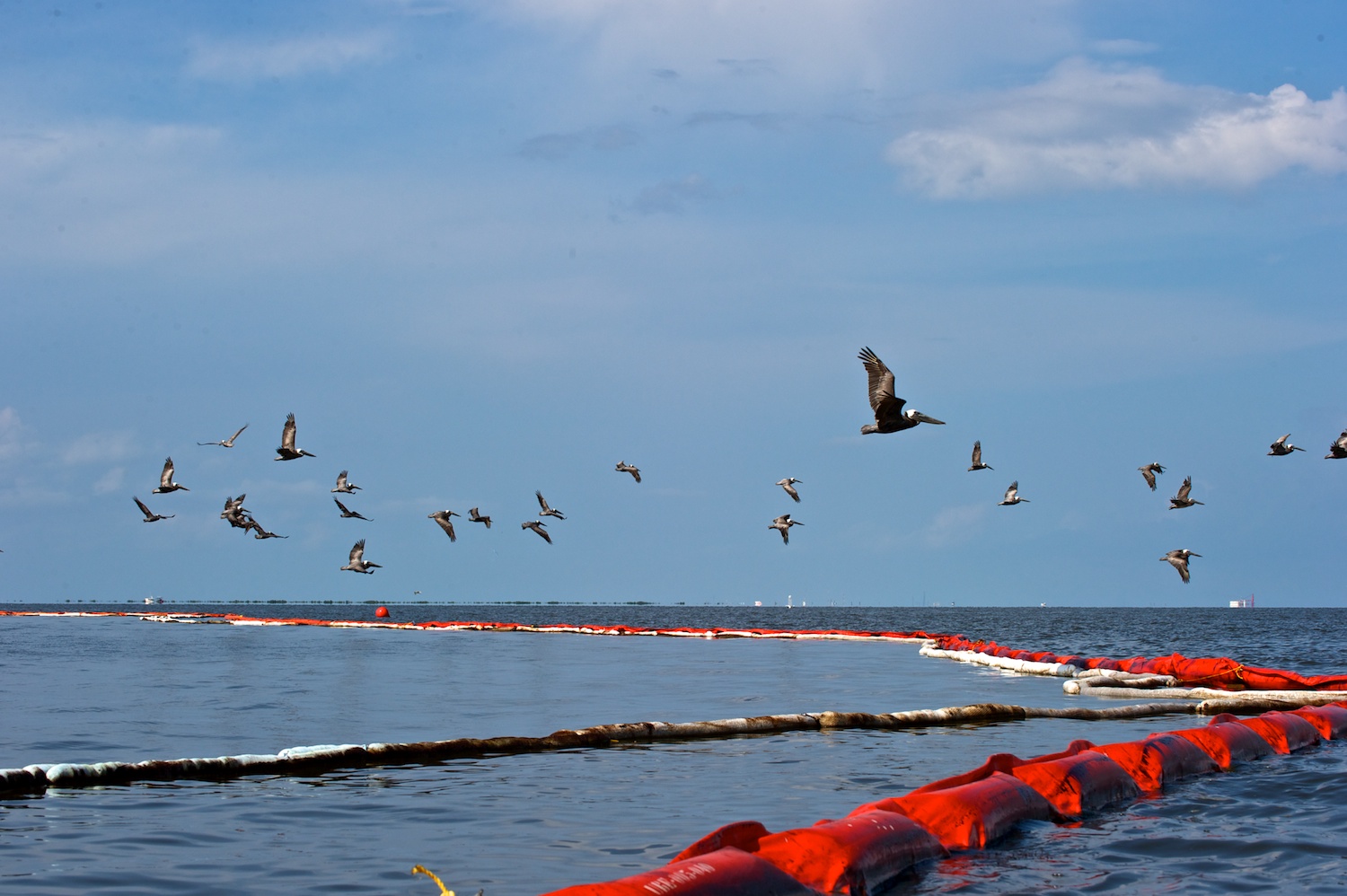
Oil slicks can be diverted or captured using floating booms. These are mechanical blockers that loop around the edges of the slick and possibly squeeze it away from land or relegate it to a controllable area. Sometimes slicks are lit on fire to burn them off. Other times, the physical barriers bring them to an area where they can be removed with sorbent booms. Using absorption or adsorption, the booms catch some of the oil manually. Most of it will be disposed, but some may be re-refined to use as fuel.
 |
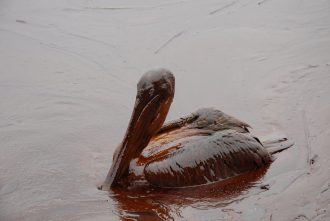 |
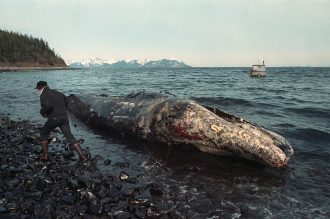
Not surprisingly, oil slicks cause untold damage to algae, seaweed, plant life, fish, birds, sea mammals, shellfish, and the soil and rocks on beaches. Oil sticks to everything, creating multiple mortal hazards. It can prevent dolphins or whales from breathing, drown birds that can’t swim away, or intoxicate fish and animals that drink or eat it. Sand and rocks may need to be dug up and thrown away if oil seepage makes them impossible to clean. Even years after an area has been hit with an oil slick, the ecosystem shows evidence of the disaster with lower biomass and fewer species.
Source: Wisegeek
 Environmental news,SOS Environment's activities
26/09/2025
Environmental news,SOS Environment's activities
26/09/2025
SOS MOBILIZED FORCES TO RESPOND TO THE UK MILITARY SHIP – HMS RICHMOND AT NHA RONG PORT, SAIGON
26/9/2025 – The Vietnam Environmental Incident Response Center is honored to be the unit selected by the British military ship HMS Richmond to be on duty when it docks at K1 Bridge – Nha Rong Port, Saigon. Recently, the UK military ship HMS Richmond docked at K1 Wharf – Nha Rong Port (Saigon), and the […]
 Environmental news,SOS Environment's activities
25/09/2025
Environmental news,SOS Environment's activities
25/09/2025
EPP-VN PROGRAM: TOWARDS SUSTAINABLE AGRICULTURE IN VIETNAM
25/9/2025 – Vietnam’s agricultural sector, despite its pivotal role in the economy and rural livelihoods, is still facing increasing challenges to the environment and public health. Another harmful practice is the open burning of straw. Burning straw releases PM2.5, carbon dioxide (CO₂), methane (CH₄), nitrous oxide (N₂O), and many other greenhouse gases, contributing to air […]
 Environmental news
01/08/2025
Environmental news
01/08/2025
ABOUT 7,500 LITERS OF DIESEL SPILLED INTO THE BALTIMORE RIVER, US
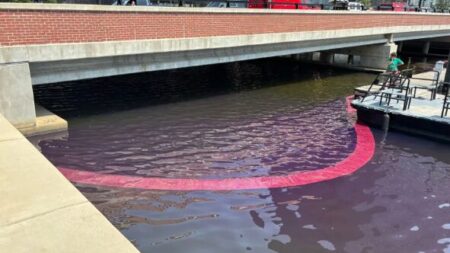
An oil spill in Baltimore, Maryland, on June 4 turned parts of the Inner Harbor red and prompted cleanup efforts to be underway. The fuel spilled from diesel tanks belonging to a supplier to Johns Hopkins Hospital. According to the Maryland Department of the Environment, the leak caused about 7,500 liters of diesel to flow […]