With more than 25 years of operational experience, SOS Environmental Center prepares, reviews and updates oil spill response plans for facilities, ports, depots, projects and local authorities. Each plan reflects actual operating conditions, credible risk scenarios, available resources and the appraisal and approval authority prescribed by Decision No. 04/2026/QD-TTg.
An oil spill response plan is an operational document for incident management. It establishes command arrangements, response personnel, equipment, protection of sensitive areas, reporting procedures and coordination with relevant authorities and organizations. A useful plan must be based on a site survey and credible scenarios rather than generic template content.
Decision No. 04/2026/QD-TTg took effect on February 10, 2026, replacing Decision No. 12/2021/QD-TTg and Decision No. 24/2025/QD-TTg. It defines plan categories, approval authorities, dossier requirements and processing times, and requires facility and project plans to follow the structure in Appendix II.

The Center’s service covers site surveys, authority classification, risk assessment, scenario development, resource planning, dossier preparation, support during appraisal and implementation after approval. Chemical incident prevention and response documents are prepared under current chemicals legislation and their separate procedures; the oil spill approval process is not used as a substitute for a chemical incident dossier.
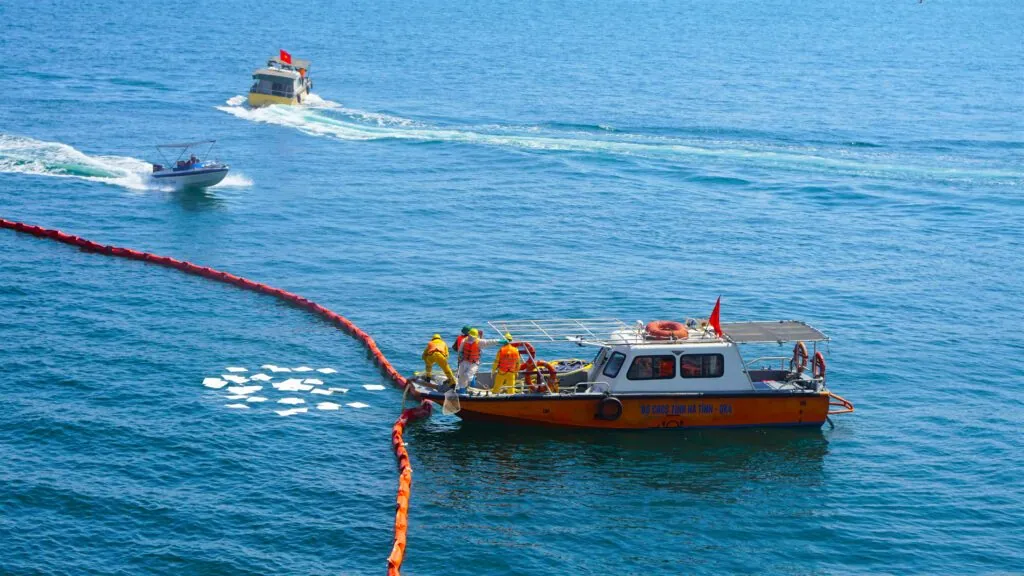
After approval, the Center can support plan communication, operating procedures, personnel training, exercises, equipment checks and updates when operating conditions change.
170VỤ
Oil spill incidents handled
400ĐƠN VỊ
Environmental incident response planning consultancy
500KHÓA
Response skills training
Decision No. 04/2026/QD-TTg establishes the following main plan categories and approval routes:
- Local ports, facilities and projects: prepare a plan for appraisal and approval by the specialized agency assigned by the provincial People’s Committee.
- Offshore oil and gas facilities and projects: appraised by Vietnam National Industry – Energy Group and approved by the Office of the National Civil Defense Steering Committee.
- Petroleum depots with storage capacity of at least 50,000 m³ or ports receiving vessels of at least 50,000 DWT: follow the national-level route, subject to the specific corporate appraisal arrangements stated in the Decision.
- Petroleum depots from 50 m³ to below 50,000 m³ or ports receiving vessels below 50,000 DWT: normally follow the provincial route, except where the Decision prescribes a corporate appraisal route.
- Retail petroleum outlets and small-risk facilities or projects with storage below 50 m³: submit to the commune-level People’s Committee for appraisal and approval, except for facilities subject to the corporate route stated in the Decision.
- Ships: prepare a shipboard oil pollution emergency plan or ship-to-ship oil transfer plan under applicable maritime rules.
The competent route must be confirmed for each facility based on its activity, scale, location, ownership and managing authority before submission.
A facility or project plan follows Appendix II of Decision No. 04/2026/QD-TTg and covers:
- Purpose and requirements.
- Situation assessment: terrain, weather, climate and hydrology; facility activities; spill sources and high-risk areas.
- Response organization, personnel and equipment: command, standing teams, supporting forces, equipment and materials.
- Credible spill scenarios and response measures: incidents on land, rivers or at sea; protection of people, infrastructure and sensitive areas.
- Responsibilities of authorities, organizations and facility departments.
- Support arrangements: communications, equipment, supplies, medical support and casualty reception.
- Command arrangements: command post, incident commander and reporting.
The working dossier should also contain maps, diagrams, contact lists, resource inventories, reporting forms and technical documents needed for immediate implementation.
- Determine the plan category and competent authority: classify the facility, depot or port scale, risk level, location and approval route under Article 7.
- Survey and collect data: inspect operations, oil sources, release pathways, sensitive areas, available personnel and equipment.
- Assess risk and develop scenarios: define representative incidents, estimated spill quantities, affected areas, response objectives and external support needs.
- Draft the plan using Appendix II: complete command, communications, personnel, equipment, response measures, logistics, medical support and reporting arrangements.
- Conduct an internal review: verify consistency with actual conditions, safety procedures, environmental documents and on-site capability.
- Submit the dossier: a request for appraisal and approval plus the plan, submitted through the relevant electronic system, online public service, postal service or directly, as applicable.
- Appraisal and revision: the appraisal council may approve without revision, approve subject to revision, or reject. The facility completes and explains revisions in response to the appraisal notice.
- Approval and implementation: communicate the plan, assign personnel, maintain equipment, conduct training and exercises, and retain records.
Processing time for a valid dossier: 15 working days for the Office of the National Civil Defense Steering Committee route; 10 working days for the specialized agency assigned by the provincial People’s Committee; and 7 working days for the commune-level People’s Committee. If the dossier is non-compliant, the receiving authority provides written guidance for supplementation within 3 working days.
Plan updates: review and update annually when conditions change. A major change that increases storage capacity or exceeds the approved response capability requires a new plan, appraisal and approval.
Practical applications
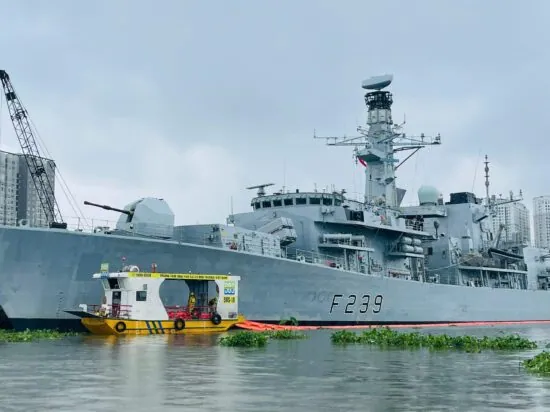
SOS MOBILIZED FORCES TO RESPOND TO THE UK MILITARY SHIP – HMS RICHMOND AT NHA RONG PORT, SAIGON

EPP-VN PROGRAM: TOWARDS SUSTAINABLE AGRICULTURE IN VIETNAM

ONE SONG… TO UNITE THE WHOLE WORLD